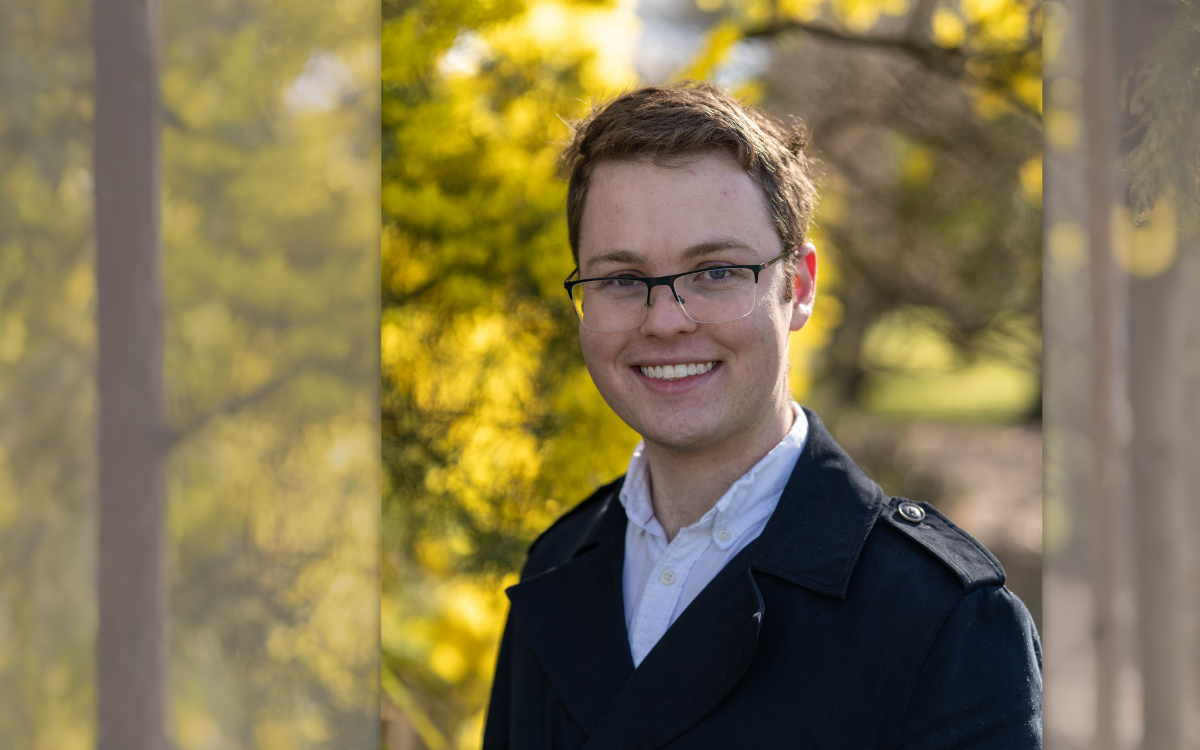
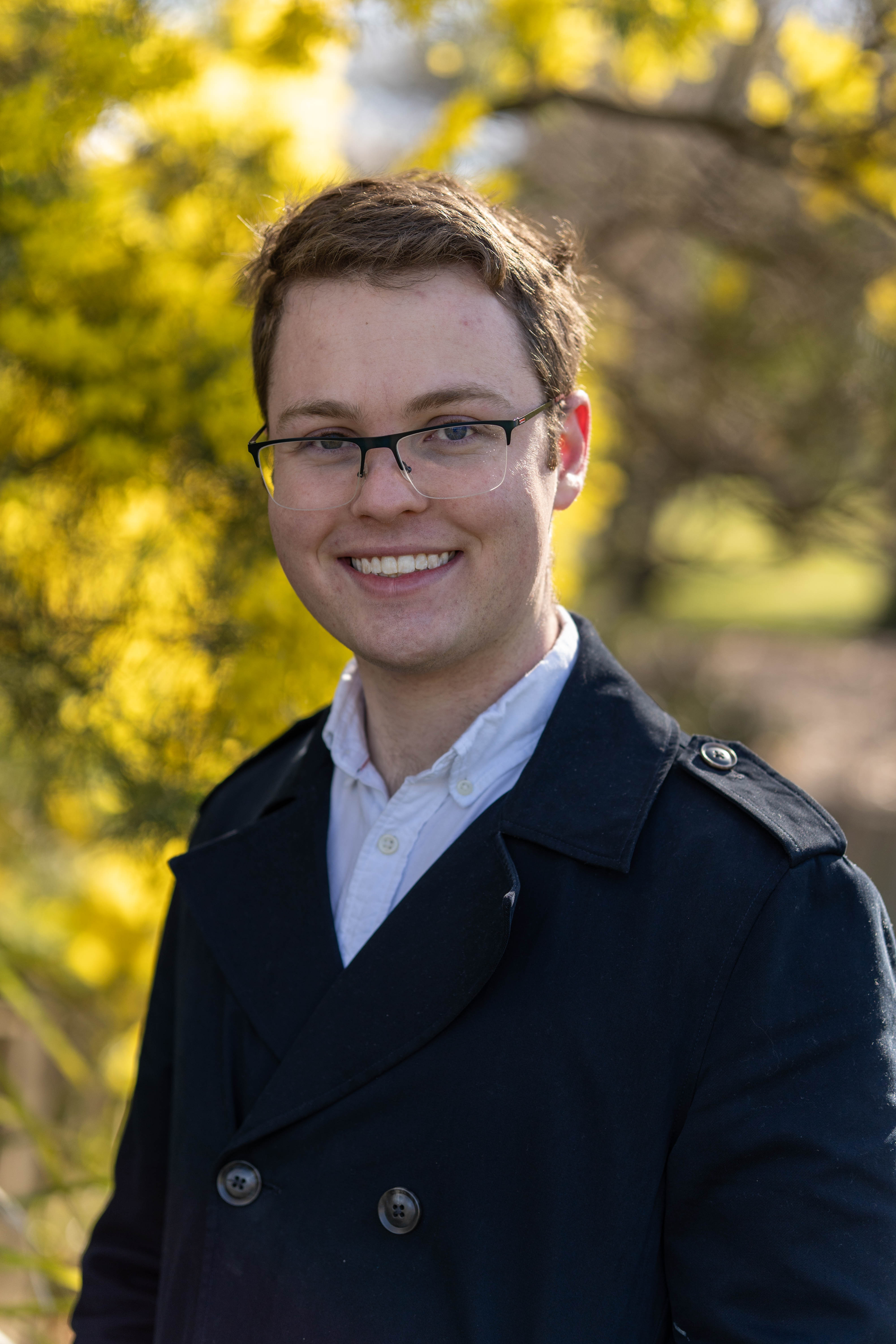
 Undergraduate honours student Harrison Oates.
 Undergraduate honours student Harrison Oates first encountered the Australian National University through the National Youth Science Forum, a program for high school students passionate about STEM, hosted yearly by the ANU. Inspired by the university’s strong research culture and the opportunity to engage in research early in his degree, he chose to study at ANU, where he has since gone on to publish his own research.
His recent paper, “Relaxing is Hard: Complexity Results for Lifted Partial Order Causal Link Planning”, co-authored with School of Computing Associate Professor Pascal Bercher, was accepted to ICAPS 2026.
The paper contributes to the field of AI planning, which focuses on how AI systems decide what actions to take in order to achieve a specific goal. Oates’ work explores planning systems that avoid committing to every detail too early, allowing parts of a plan to remain flexible. However, the challenge, as he explained, is that this flexibility can come at a computational cost, as computers require larger amounts of time and memory for more difficult problems.
“One of the key findings is that, in this more flexible setting, planning still remains very hard,” Oates said.
| “ |
From foundations to impact
Oates’ collaboration with Bercher stems from taking Bercher’s COMP1600, “Foundations of Computing.” The course sparked a curiosity for the field of planning and the theoretical properties of computation. Bercher’s enthusiasm for the subject also stood out and made him Oates’ top choice for a third-year research project.
The project led to ongoing mentorship from Bercher, which has been transformative in Oates’ journey as an undergraduate researcher. Through weekly meetings, feedback and support through conference submissions, Oates gained valuable experience in research and writing for publication.
“Pascal is a great hands-on mentor,” Oates said. “I can message him at any time and he will respond.”
Oates attended ICAPS 2025 in Melbourne, meeting many researchers in his field, including people whose work he had cited and participating in the Launchpad workshop for undergraduate and master’s students.
Now in his honours year, Oates continues research on probabilistic hierarchical task network planning, exploring how AI systems can reason through tasks under uncertainty while remaining safe and interpretable.
Student organisations as research incubators
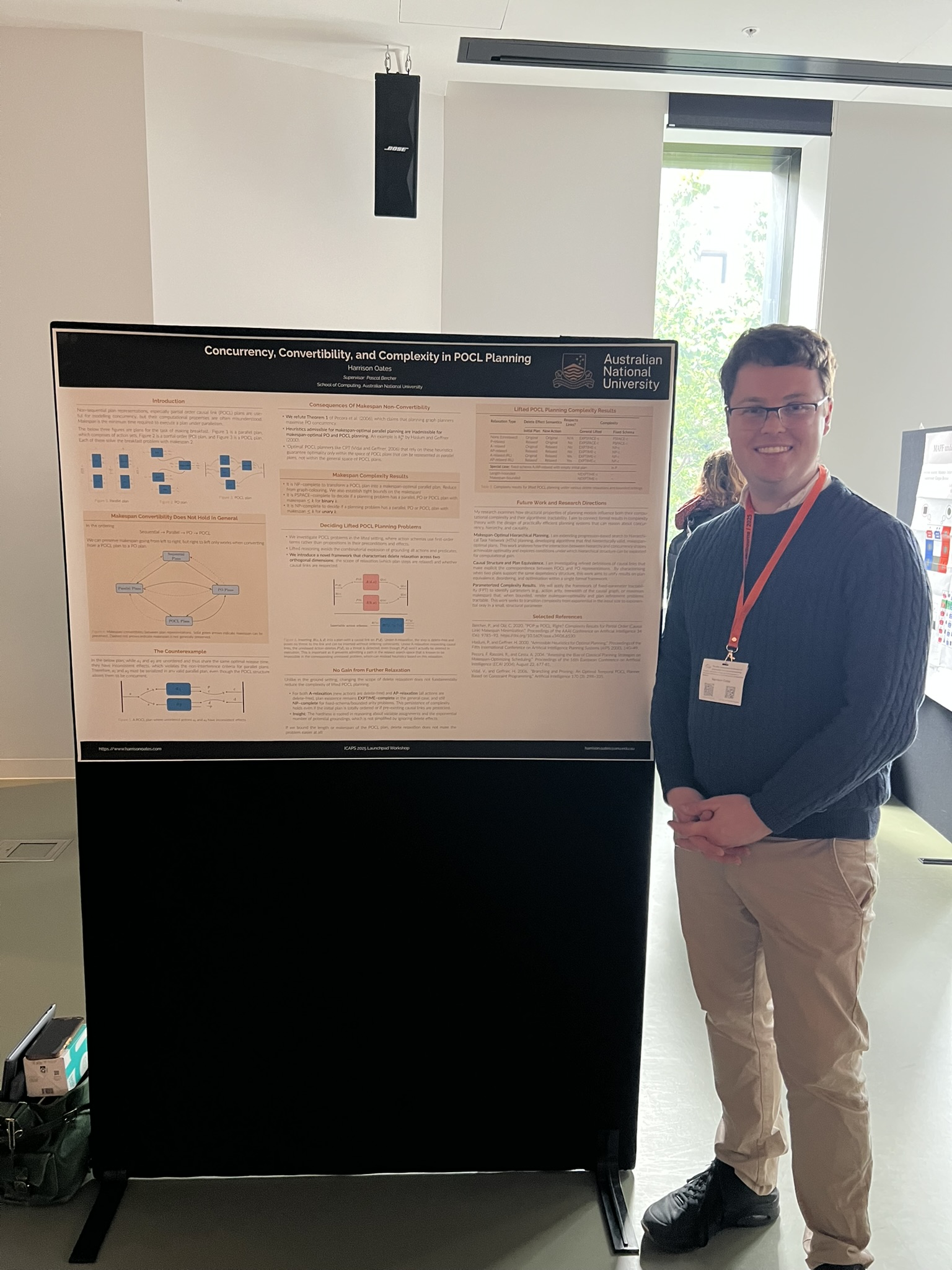 Harrison has been actively involved in ANU student life.
 Oates attributes the success of ANU’s undergraduate researchers to a strong student community where students motivate and inspire each other.
As a past president of the Computer Science Students Association and the ANU Students’ Association (ANUSA) Clubs Officer, he found that clubs and informal student spaces play a vital part in the research ecosystem at ANU.
“Clubs and societies are underrated as research incubators,” Oates said. “The kind of informal intellectual exchange that occurs there is difficult to replicate in formal settings, but it plays a real role in building a culture of curiosity. There’s always space for informal, low-stakes discussion, whether it’s a first-year working through a concept or an honours student testing an argument.”
Oates points to groups like the Undergraduate Research Society, which runs events and initiatives for students who might not otherwise see themselves in the research space.
At the intersection of code and community
Outside of his research and leadership activities, Oates spent two years with the ANU Solar Racing team, including as competition lead, travelled to Thailand for a multilateral conference on internet policy, and recently co-founded Youth Tech Net, a student society focused on interdisciplinary technology policy.
For Oates, the ability to move between research, student leadership, and policy initiatives reflects the breadth of opportunities available at ANU, as well as its close-knit and motivated community.
“I’ve been able to do all these cool and interesting things that I wouldn't have had the chance to if I hadn’t gone to the ANU,” Oates said. “The density of opportunities that you’re able to get while you’re studying in Canberra is very difficult to replicate elsewhere.”
Oates’ double degree in Advanced Computing (Research and Development) / Politics, Philosophy, and Economics reflects his belief that a technical lens is vital for many societal issues and that most problems cannot be solved by technical work alone. Now preparing PhD applications, he seeks to work at the intersection between technical AI and technology policy, with a focus on building safe systems that respect the rights and dignity of its users.
| “ |
“I hope to continue to do work around AI governance, with a bit of planning flair,” Oates said.
For students hoping to begin their own research journey, his advice is to focus less on rushing toward publication and more on the quality of the work itself.
“I’d say pace yourself,” Oates said. “Rather than rushing to get a paper out there, the focus should always be on doing good research.”
If you are a member of the ANU School of Computing and Integrated AI Network community and have a story to pitch, email rahul.shome@anu.edu.au to submit it for consideration.
You may also like
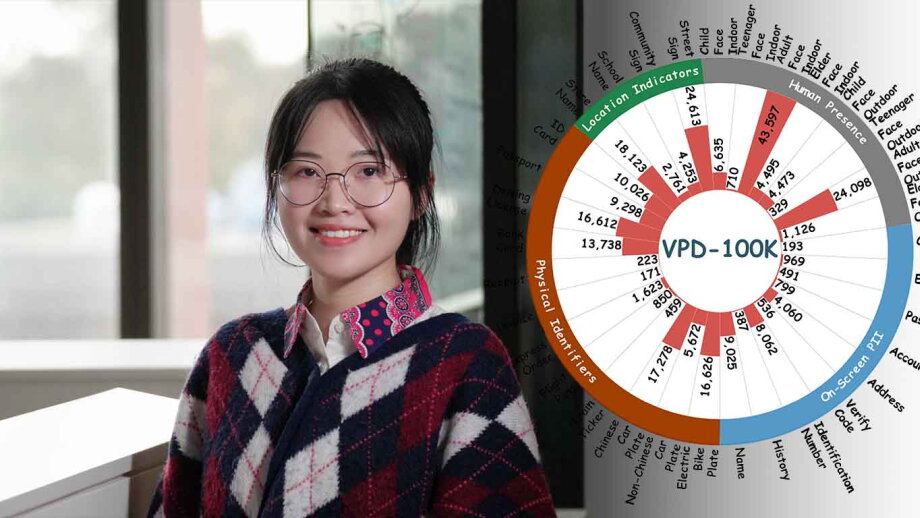
A deeper understanding of software and privacy leads to a secure future
Dr Xiaoyu Sun discusses software and privacy spanning bug detection, deployment reliability, and the VPD-100k visual privacy dataset unveiled at ICML.
Translating risk and consequences of emerging technologies to engineers and policymakers
Professor Kathryn Henne discusses how Australia can lead in AI regulation, bridging the gap between social sciences, engineering, and policy.
ANU Computer Vision Researchers Shine Again at CVPR 2026
Building upon decades of research excellence, ANU computer vision researchers, students, and alumni achieved major awards and acceptances at IEEE CVPR 2026.