
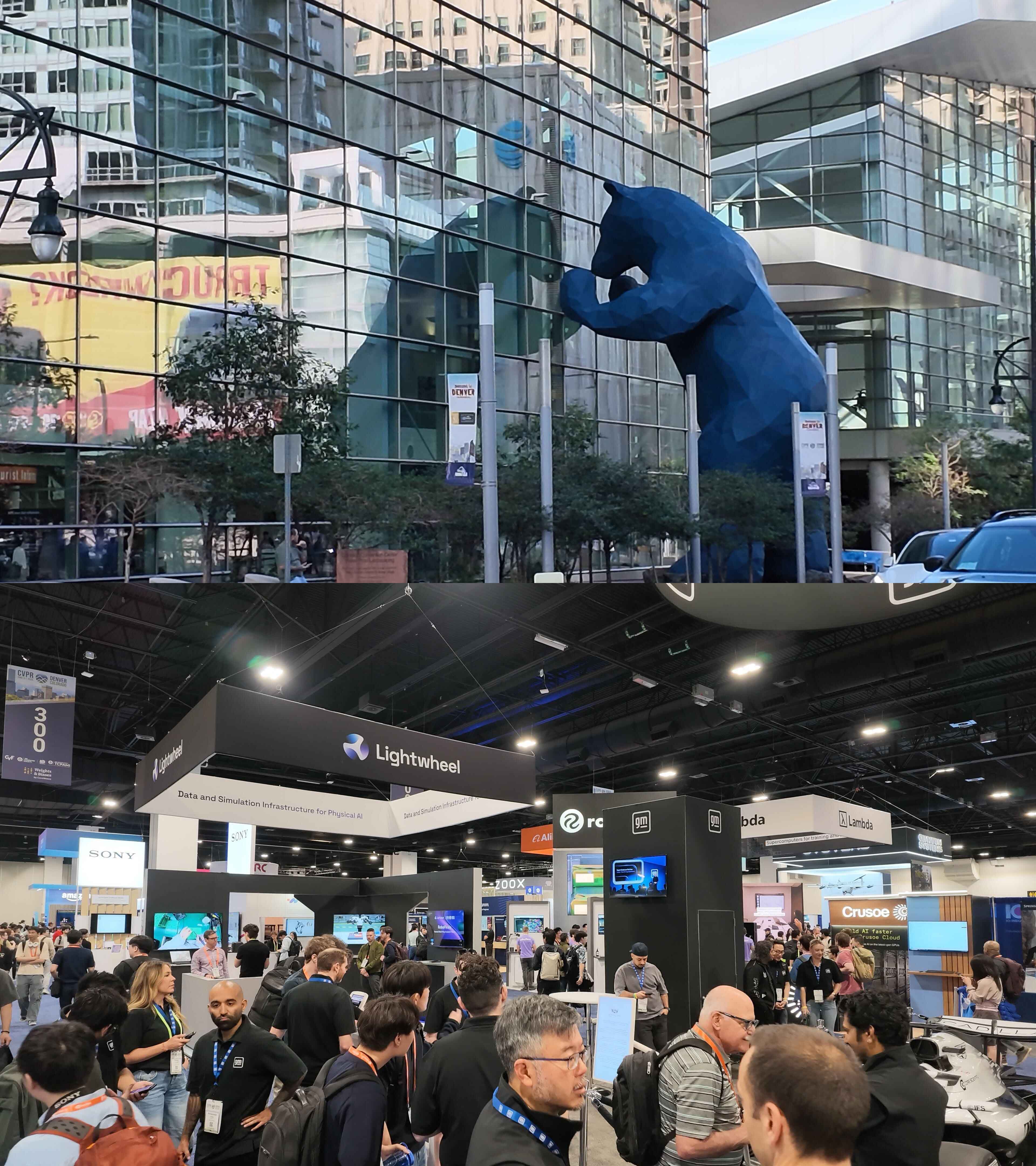
 CVPR 2026 at Denver, Colorado.
The Australian National University made major achievements in 2026’s IEEE Conference on Computer Vision and Pattern Recognition, building upon its success from past decades’ research excellence in the field. With awards and paper acceptances for faculty, students, and alumni, the ANU continues to cement its status as a world leader for computer vision and artificial intelligence (AI) research.
IEEE CVPR is the flagship international conference for AI applied to vision understanding in 2D and 3D spaces. Computer Vision, a key building block of intelligent systems, enables machines to see and understand the world, for example through images perceived through cameras. Making sense of the world is a critical capability for AI ranging from facial recognition to self-driving cars.
Five ANU School of Computing faculty members jointly with a dozen current ANU PhD students attended CVPR 2026, held in Denver, Colorado, USA, in June 2026. The conference attracted more than 10,000 participants and over 100 industry exhibitors, including nearly every major technology company with a significant AI presence.
“CVPR is one of the world's premier conferences in computer vision and artificial intelligence, and it is extremely competitive,” said School of Computing Professor Hongdong Li . “This year, the conference received more than 16,000 valid paper submissions, with an acceptance rate of approximately 25% only.”
Li has been involved in CVPR as a computer vision researcher for over two decades. He is one of the senior area chairs for CVPR, which provide guidance and oversight of paper selection. Li was one of the founding chief investigators for the former ARC Centre of Excellence for Robotic Vision and serves as the Associate Editor-In-Chief for the flagship AI journal IEEE Transactions for Pattern Analysis and Machine Intelligence. His visual understanding methods have been used for autonomous vehicle navigation through research gift grants from Ford Motors and General Motors.
| “ |
“ANU’s lasting impact is reflected in its alumni, many of whom now lead AI teams and research labs in tech companies and universities worldwide.”
ANU alum and lead researcher at Microsoft
Computer Vision’s Critical Role in Bringing AI to the Real World
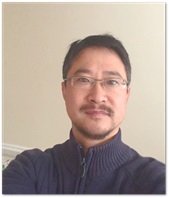 Professor Hongdong Li.
Computer vision plays a critical role as artificial intelligence learns to communicate and reason beyond visual pattern understanding, embracing multimodal sensing through vision and audio. As AI agents increasingly operate in the physical world, they require the ability to perceive and interact with real-world environments.
“As an interdisciplinary field, I find computer vision fascinating because there are still many unsolved problems,” Li added.
Computer vision research today extends well beyond visual perception and robotics, driving advances across many disciplines. At ANU, this is reflected in Li’s cross-disciplinary collaborations, including projects on plant phenotype analysis for vaccine production, advanced imaging techniques that add a fourth dimension of time, and materials imaging for drug discovery.
ANU’s Exceptional Computer Vision Research Community
ANU has a long and distinguished history in computer and robotic vision research and has consistently ranked among Australia's leading institutions in computer vision.
Li marked that ANU continues to maintain a strong international profile in computer vision research, with its research group widely recognised as one of the leading groups in Australia and well respected within the global computer vision community.
The current ANU vision research community includes internationally recognised researchers such as Richard Hartley , Steve Gould , Nick Barnes , Liang Zheng , Miaomiao Liu , Dylan Campbell , Hongdong Li , and Jing Zhang .
Emeritus Professor Hartley, known for his pioneer work in 3D computer vision and regarded as the “founding father” of the field of multi-view geometry in vision, was elected to the Fellowship of the Royal Society, and is also a Fellow of the Australian Academy of Science. Campbell received an Honourable Mention for the prestigious Marr Prize, one of the field's highest recognitions.
At CVPR 2026 alone, there were 26 papers presented at the conference with at least one ANU researcher as co-author. These papers covered a broad range of topics, including large vision-language models, generative AI for image and video synthesis, robotic navigation and embodied AI, and medical image analysis.
| “ |
“Being exposed to that research environment early on was extremely valuable for me, and it helped shape the way I think about rigorous research problems. ANU’s combination of deep theoretical foundations, strong technical standards, and real-world relevance has made it an important contributor to the broader computer vision community.”
ANU alum and Oxford University PhD student
ANU Alumni win awards for research presented at CVPR
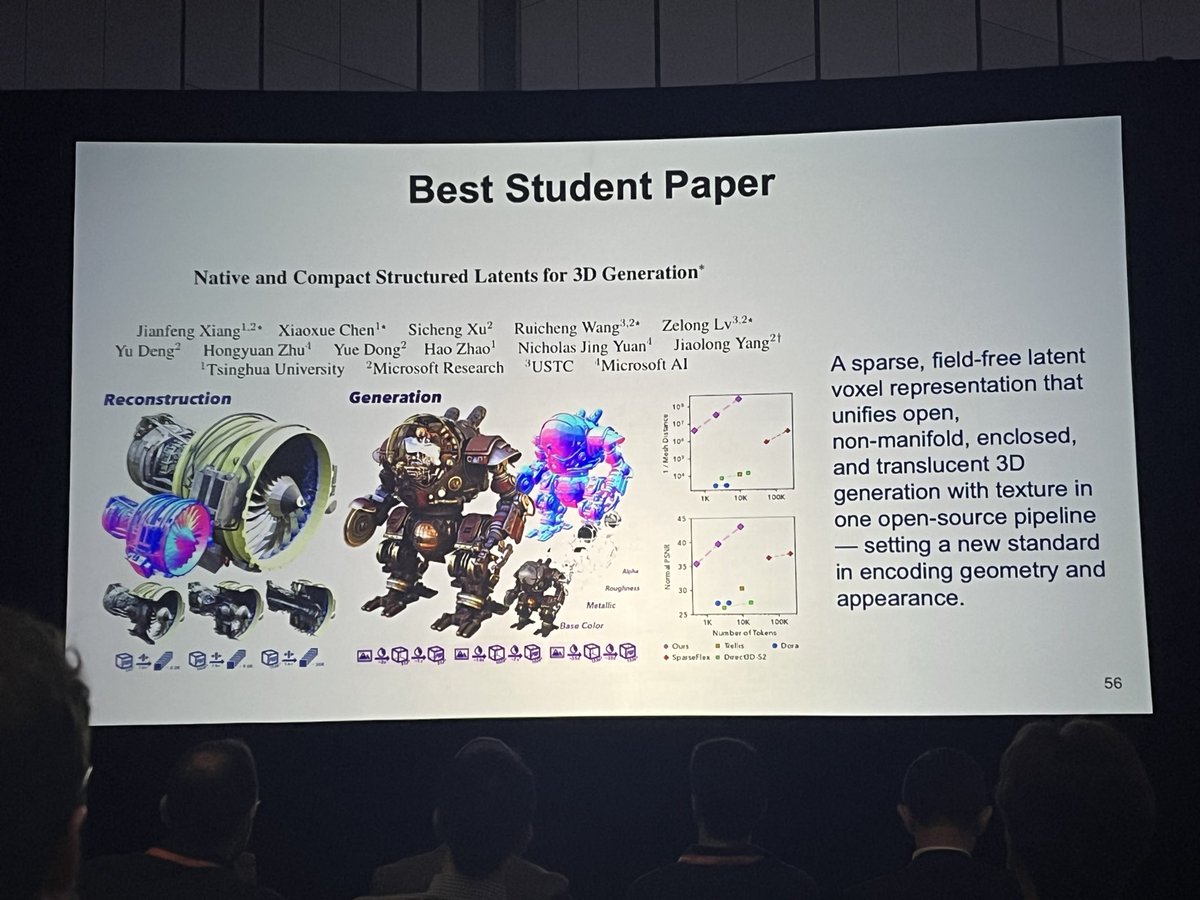 Dr. Jiaolong Yang (right) presenting his team's award-winning research on 3D object generation at CVPR 2026.
Also from the CVPR 2026 proceedings, Li highlights two ANU alumni’s award-winning publications: “Native and Compact Structured Latents for 3D Generation” by Jiaolong Yang, and “VGGT-Ω” by Jianyuan Wang.
Yang, currently a lead researcher at Microsoft and a former PhD student of Li’s, led a team of interning students to win the prestigious 2026 CVPR Best Student Paper Award for their work on 3D object generation.
“Beyond checking out the new papers and tracking the latest academic and industry trends, the absolute highlight was the community,” Yang said. “It was a wonderful opportunity to catch up with old friends—inclusive of my PhD supervisor, Professor Li—and to connect with some of the world's top young talents. ANU’s lasting impact is reflected in its alumni, many of whom now lead AI teams and research labs in tech companies and universities worldwide.”
Another former ANU undergraduate, Wang was one of ten finalists for CVPR 2026’s Best Paper Award for “VGGT-Ω,” which builds upon his research that won CVPR 2025’s Best Paper Award, “VGGT: Visual Geometry Grounded Transformer.” VGGT introduced a widely popular model that can use one or more images and predict a whole range of characteristics of the underlying visual geometry, including the properties of the camera, distances, and matching points between different views. He studied at the ANU as an undergraduate and honours project student before moving to Oxford University for his PhD.
“ANU’s computer vision group, led by researchers such as Emeritus Professor Richard Hartley and Professor Hongdong Li, has an outstanding international reputation, particularly in geometric computer vision,” Wang said.
“Being exposed to that research environment early on was extremely valuable for me, and it helped shape the way I think about rigorous research problems,” Wang continued. “ANU’s combination of deep theoretical foundations, strong technical standards, and real-world relevance has made it an important contributor to the broader computer vision community.”
You may also like
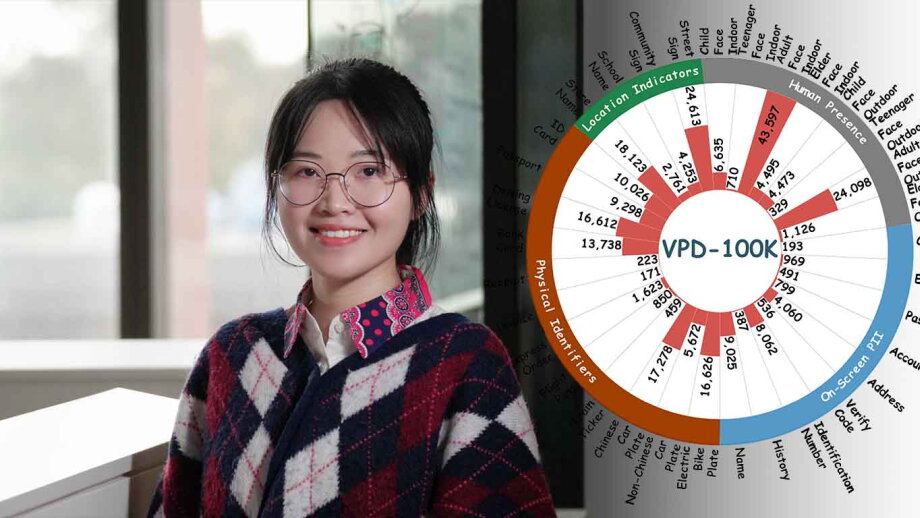
A deeper understanding of software and privacy leads to a secure future
Dr Xiaoyu Sun discusses software and privacy spanning bug detection, deployment reliability, and the VPD-100k visual privacy dataset unveiled at ICML.
Translating risk and consequences of emerging technologies to engineers and policymakers
Professor Kathryn Henne discusses how Australia can lead in AI regulation, bridging the gap between social sciences, engineering, and policy.
Cybersecurity expert protects democracy through academic independence
Dr Thomas Haines discusses how cryptography, cybersecurity, and academic independence safeguard democratic elections.